Modular Office Furniture Solutions
A complete office fit out rarely comes down to a single piece of furniture. It usually draws on several categories at once, from seating to storage to meeting spaces. Because we manufacture all of these in house, materials, finishes, and hardware stay consistent across the entire project instead of varying from vendor to vendor, which also makes future additions easier to match.
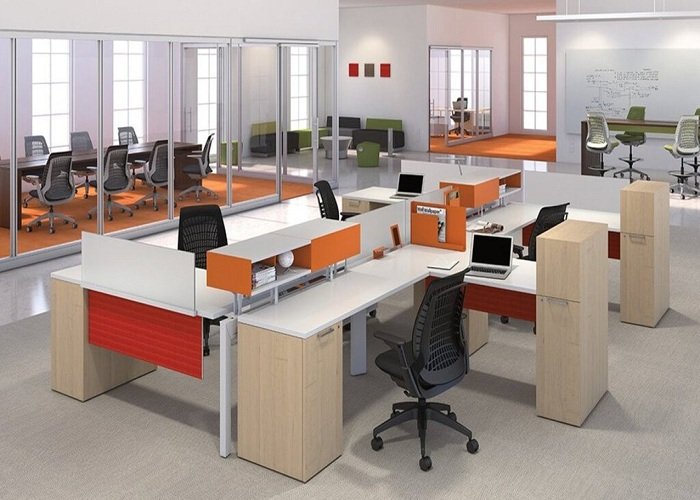
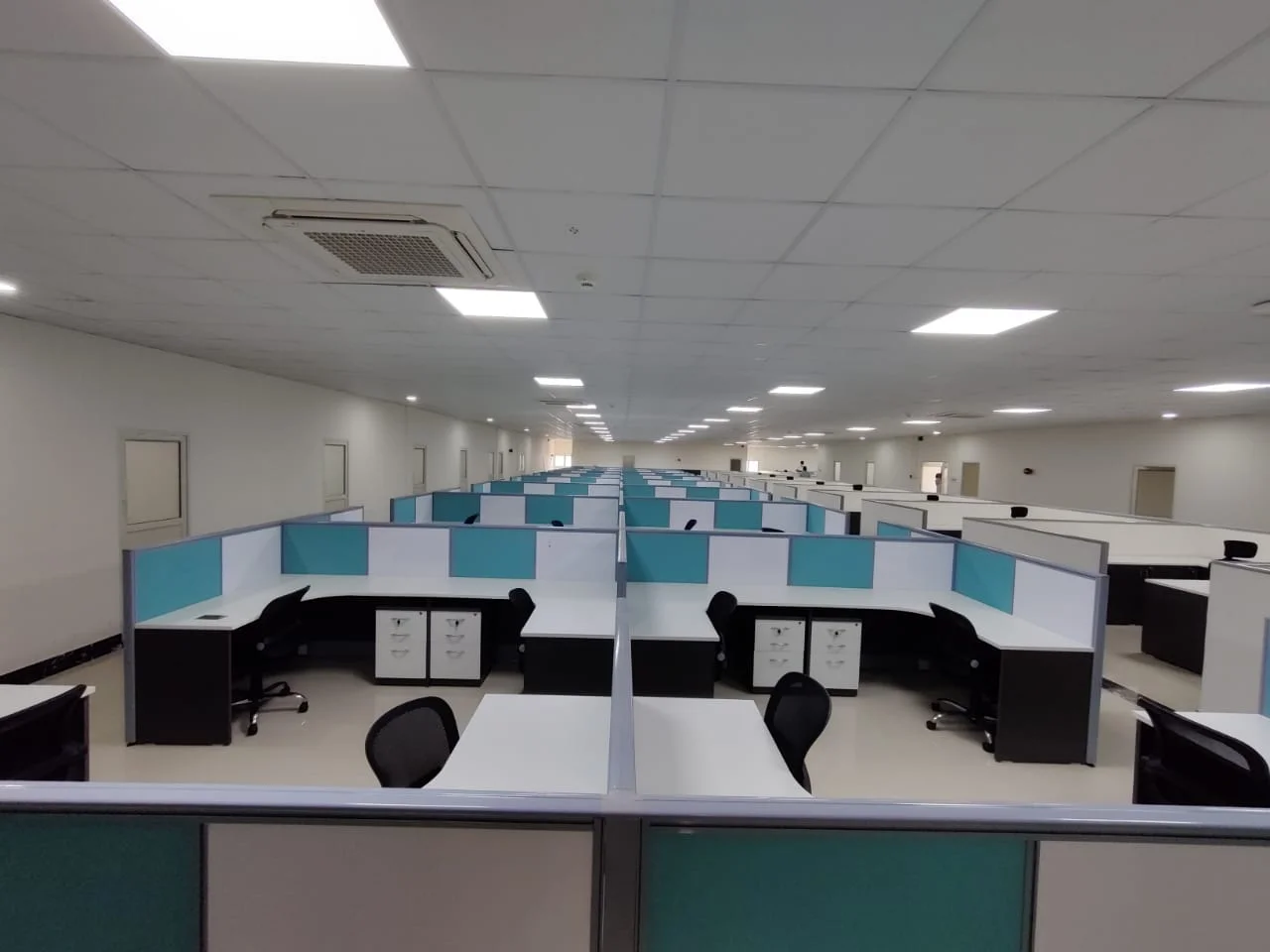
- Workstations: Modular workstations form the backbone of most office layouts, built to balance seating density with comfortable working space for each employee. As a manufacturer of modular workstations, we engineer these around standard panel and frame sizes, so a single workstation range can be scaled from a five person team to a full floor of two hundred seats without redesigning the system from scratch.
- Desks: From individual desks to executive setups, modular office desks are built with durable boards and finishes that hold up to daily use, including laptops being moved, monitors adjusted, and drawers opened and closed hundreds of times a week, while still fitting the overall design language of the space.
- Storage: Office storage furniture, including cabinets, filing units, and lockers, is designed to fit within or alongside workstations rather than as bulky standalone units. This keeps documents, personal items, and shared equipment organised without eating into the usable floor space a growing team needs.
- Partitions: Workstation and cabin partitions add privacy and reduce noise across open plan floors. Height, material, and placement are sized to match the surrounding workstations, so partitions read as part of the furniture system rather than an afterthought bolted on later.
- Conference Furniture: Conference tables and meeting room furniture are manufactured to the exact dimensions of the room they are going into, so seating capacity, cable access, and walking space around the table are all planned in from the start rather than adjusted after installation.
- Reception Furniture: A reception desk is usually the first thing a visitor or client sees, and reception furniture is designed to reflect the company's branding, in shape, finish, and colour, while working within the actual footprint of the entrance area.
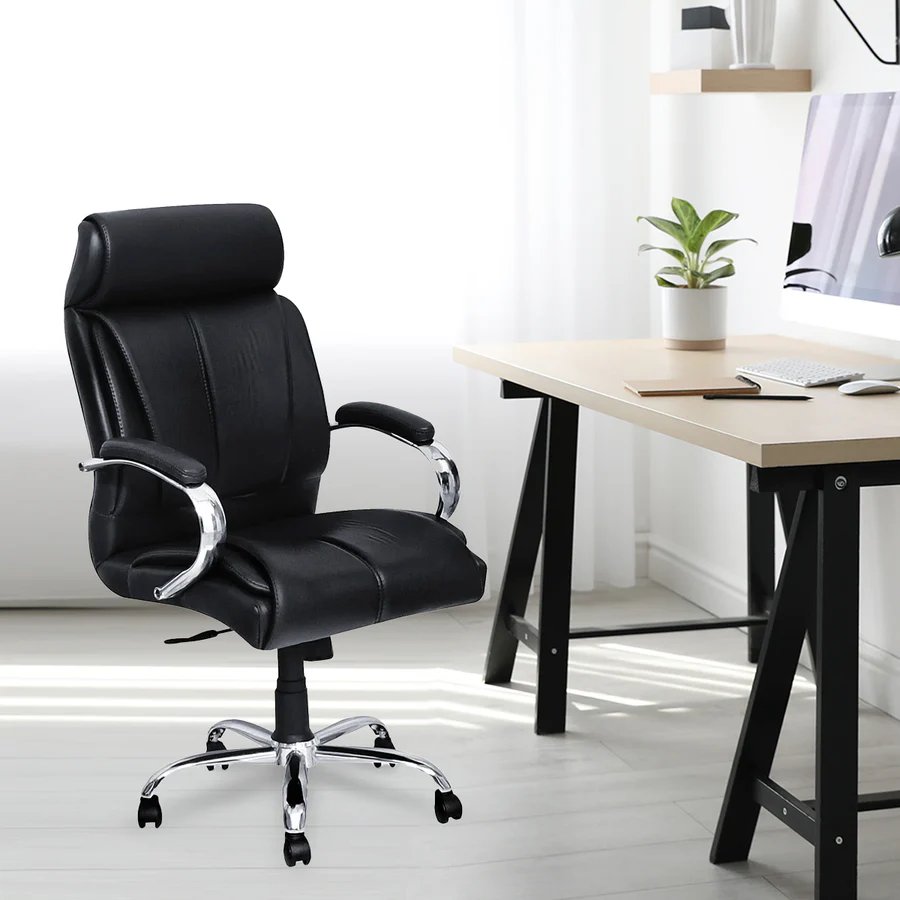
- Executive Furniture: Executive office furniture for cabins and leadership spaces uses upgraded finishes and detailing, sometimes veneer or premium laminate surfaces, offering a distinct look while keeping the same modular, easy to maintain construction as the rest of the office.
Types of Modular Office Furniture
Workstations are not one size fits all. The right configuration depends on team size, floor shape, how much natural collaboration a role needs, and how tightly seating has to be packed to hit a headcount target within the available area. The main types of modular office furniture used across Indian offices are:
- Linear Workstations: Linear workstations run in straight rows and are one of the most space efficient layouts for larger, open plan teams, particularly where desk to desk interaction matters less than maximising seat count.
- L Shaped Workstations: L shaped workstations give each employee significantly more usable desk surface within the same footprint, which works well for roles that need dual monitors, drawing space, or extra room for paperwork and reference material.
- Cluster Workstations: Cluster workstations group four or more seats facing each other around a shared frame, encouraging quick, informal collaboration between team members who work closely, common in product, design, and project teams.
- Back to Back Workstations: Back to back workstations pair two rows facing each other with a shared central divider, a common choice for offices trying to maximise seats within a fixed floor area while still giving each row a sense of separation.
- Bench Workstations: Bench style workstations use a shared support frame across several seats instead of individual legs for each desk, cutting down on structural material and cost while keeping a clean, uniform look across a large floor.
- Adjustable and Flexible Workstations: Adjustable and flexible workstation systems allow desks, dividers, or entire clusters to be resized or moved without specialist tools, which suits offices that expect team size, seating ratios, or department layouts to change more than once a year.
Applications of Modular Office Furniture
Modular furniture adapts to how different kinds of organisations actually operate day to day, which is part of why it now shows up across such a wide range of settings rather than being limited to a single industry.
- Corporate Offices: Corporate offices use modular systems to standardise furniture across departments and floors while still allowing each team to configure its own section. Sales might need cluster seating, while finance may prefer more private, partitioned desks. This applies equally to MNC offices and other large offices, where consistency across multiple departments and floors matters as much as the layout of any single section, and to commercial projects more broadly, where the furniture needs to hold up across shared or leased spaces.
- IT and Technology Offices: IT and technology offices typically need higher desk density and strong cable management for multiple monitors, docking stations, and networking equipment per seat, all of which modular systems are specifically engineered to route and organise. Many of these fit outs are combined with broader interior design work, so furniture, flooring, and lighting are planned together rather than separately.
- Startups and Small Businesses: Startups and small businesses benefit from modular furniture's ability to scale gradually, adding a handful of workstations at a time as headcount grows, rather than committing to a large, fixed furniture order before the team size is even confirmed.
- Coworking Spaces: Coworking spaces need furniture that can be reconfigured frequently to suit different tenants, desk sharing arrangements, and short term leases, which is exactly where modular systems have a clear practical advantage over fixed furniture.
- Educational Facilities: Educational facilities use modular desks and storage in administrative offices, staff rooms, and shared work areas, where layouts often need to flex around changing timetables, exam seasons, or department reshuffles.
- Healthcare and Administrative Offices: Healthcare and administrative offices rely on modular storage and workstations to manage records, equipment, and staff workspaces within limited floor space, often alongside strict cleanliness and organisation requirements.
- Government and Institutional Offices: Government and institutional offices generally need standardised, durable furniture across multiple departments and sometimes multiple buildings, which modular manufacturing is well suited to deliver consistently and at scale. For larger campuses and staff facilities, this is often paired with labour furniture for support and utility areas alongside standard office seating.
Uses of Modular Office Furniture
Beyond the type of organisation, modular furniture is chosen based on the specific activity each part of an office actually needs to support. A single floor typically combines several of these uses at once.
- Employee Workspaces: Individual workstations give each employee a defined desk area, personal storage, and cable access suited to daily tasks, without needing custom furniture built for every single role.
- Manager and Executive Workspaces: Manager and executive furniture usually combines a private desk setup with additional storage and a slightly upgraded finish appropriate to cabin spaces, while still following the same modular design logic as the rest of the office.
- Collaboration Areas: Cluster and open seating arrangements support informal collaboration between team members without needing to book a dedicated meeting room for every quick discussion.
- Meeting Areas: Conference tables and meeting room furniture are sized and shaped to support focused discussions, from small two person huddle rooms to larger boardrooms seating fifteen or more.
- Reception Areas: Reception furniture sets the first impression for visitors and clients, and is designed to fit the entrance layout while clearly reflecting the company's branding and overall interior design.
- Storage and Organisation: Storage units, lockers, and storewell systems keep documents, equipment, and personal belongings organised across the office, reducing clutter on desks and in shared walkways.
- Flexible Workspaces: Movable or adjustable furniture supports hot desking and shared seating arrangements common in hybrid work setups, where desk occupancy varies significantly day to day.
Benefits of Modular Office Furniture
Choosing modular systems over fixed, one piece furniture has an effect that goes well beyond the initial installation. It shapes how easily the office can adapt over the following years.
- Flexible Configuration: Modular components can be arranged in multiple layouts using the same base units, so a single furniture order can support several different floor plans over the life of the furniture, not just the one it was originally installed for.
- Space Utilisation: Standardised dimensions make it far easier to plan seating density accurately during the design stage, helping offices fit more usable workstations into the same floor area without cramming desks together.
- Easy Reconfiguration: When teams move, merge, or grow, modular workstations can be rearranged or added to without discarding the existing furniture, which keeps both cost and downtime lower than a full refit.
- Cable Management: Built in cable trays and routing channels keep wiring for monitors, chargers, and shared devices organised and out of sight, reducing both visual clutter and the risk of trailing cables becoming a hazard.
- Faster Installation: Because components are pre manufactured to standard fittings, on site installation is generally quicker than building custom, fixed furniture from raw materials, which shortens the gap between signing off a design and moving in.
- Easy Relocation: Modular furniture can be dismantled and reassembled with far less damage than fixed furniture, which matters for offices that may relocate, downsize, or expand to a second floor within a few years.
- Workplace Organisation: Consistent storage and desk components across departments help maintain a tidier, more organised office overall, since every floor follows the same underlying system rather than a mix of ad hoc furniture.
- Long Term Adaptability: As the business changes, whether that means more staff, new layouts, a different floor, or a shift to hybrid seating, modular systems can be adjusted rather than fully replaced, which meaningfully reduces long term furniture costs. Routine maintenance, such as replacing hardware or refreshing a panel, is also simpler than with fixed furniture, since individual components can be serviced without disturbing the rest of the setup.
Custom Modular Office Furniture
Modular does not mean rigid. Standard sizing works for many offices, but plenty of spaces have a column in the wrong place, an irregular room shape, or specific brand requirements that off the shelf furniture simply cannot accommodate. As a modular furniture manufacturer, we treat customisation as a standard part of the process rather than a special request, whether that means furniture built as per your layout or matched exactly to your floor plan.
- Custom Sizes: Workstations and desks can be manufactured to non standard dimensions to fit columns, odd corners, low beams, or unusually shaped rooms that standard catalogue sizes were not designed for.
- Custom Layouts: Furniture is designed around the actual floor plan of the space, rather than asking a business to adjust its intended layout to fit whatever standard furniture sizes happen to be available.
- Custom Finishes: Laminate colours, textures, and metal frame finishes can be matched to a company's brand identity or the interior design theme of the office, so the furniture looks intentional rather than generic.
- Integrated Storage: Storage units can be built directly into workstations and desks rather than added as separate furniture, which saves floor space and keeps the overall layout cleaner.
- Cable and Power Solutions: Power sockets, data ports, and cable trays can be integrated into the furniture design based on the office's actual electrical layout, reducing the need for visible extension cords or surface mounted trunking later.
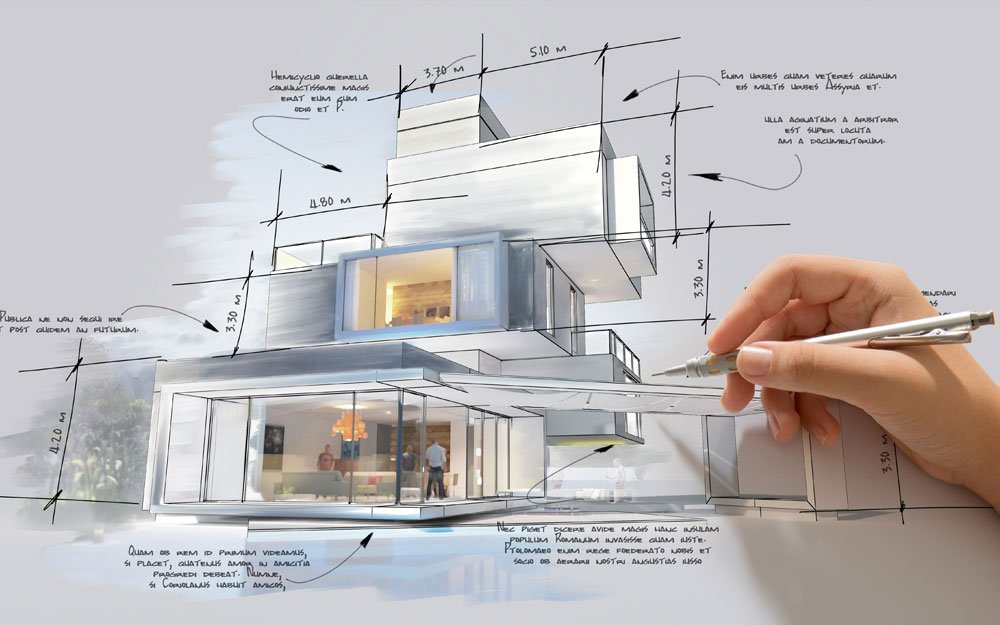
- Floor Plan Based Design: When a client shares architectural drawings or a space plan, we design and quote furniture directly against them, which usually shortens the time between the initial enquiry and final installation considerably.
Materials, Finishes and Components
The materials and components used in modular furniture largely determine how well it holds up over years of daily office use, which is why material specifications are treated as a core part of the design process rather than an afterthought. The right choices here directly affect the overall lifespan of the furniture.
- Boards and Panels: Workstations and desks are built on engineered boards chosen for strength, weight, and consistency across large orders, ensuring that a hundred desks manufactured for one project all perform and finish identically.
- Surface Finishes: Laminate and veneer finishes are selected for durability against scratches, stains, and daily wear, while still offering a wide enough range of colours and textures to match different interior styles.
- Metal Frames: Support frames and legs are typically powder coated metal, chosen for the structural stability needed in larger workstation clusters and benching systems that carry the weight of multiple desks at once. For projects that need heavier duty steel frames, the same manufacturing setup is used to build these components to a consistent standard.
- Edge Banding: Edge banding applied along desk and panel edges protects the exposed board core from moisture, chipping, and general wear, extending the usable life of the furniture significantly.
- Hardware: Hinges, locks, drawer slides, and other fittings are selected for repeated daily use, particularly on storage units and cabin furniture that get opened and closed dozens of times a day.
- Cable Management Components: Cable trays, grommets, and routing channels are built into the furniture design from the outset rather than added on after installation, which keeps wiring both tidy and accessible for future changes.
Ergonomic Modular Office Furniture
Furniture design has a direct effect on employee comfort, posture, and productivity, particularly in roles that involve sitting at a desk for most of the working day.
- Ergonomic Workstations: Workstation dimensions are planned around comfortable reach and seating distances, reducing strain on the neck, shoulders, and wrists during long working hours.
- Adjustable Desks: Height adjustable desk options allow employees to alternate between sitting and standing through the day, which is increasingly requested for roles involving extended screen time.
- Working Heights: Desk and storage heights are set to established ergonomic guidelines, keeping screens, keyboards, and work surfaces at a comfortable level for the average user.
- Monitor and Cable Positioning: Monitor arms and cable routing are positioned to reduce clutter on the desk surface and support proper screen height and viewing distance, cutting down on the need for makeshift laptop stands or stacked books.
- Employee Centred Design: Overall workstation design considers how employees actually move and work through the day, including reaching for storage, standing up for meetings, and plugging in devices, rather than only how the furniture looks on a floor plan drawing.
Modular Office Furniture Design and Space Planning
Good furniture starts with a clear plan of the space it is going into, not just a list of modular office furniture ideas pulled from a catalogue. Space planning is where most of the long term value of a modular system actually gets decided.
- Space Assessment: The process begins with a review of the available floor area, columns, load bearing walls, and any other structural constraints of the office before a single furniture decision is made.
- Seating Planning: Seating capacity is calculated against current headcount and any planned hiring over the next one to two years, so the layout does not need revisiting again too soon after installation.
- Workstation Layout: Workstation configurations are chosen based on available space, aisle requirements, and how teams need to interact with each other on a daily basis.
- Storage Planning: Storage requirements are mapped against document volume, shared equipment, and personal storage needs for each department, since a sales team and a legal team, for example, rarely need the same amount of storage.
- Circulation Planning: Walkways and aisle widths are planned to keep movement through the office smooth, even at full occupancy, and to meet basic safety and accessibility expectations.
- Private and Collaborative Zones: Cabins, quiet zones, and open collaboration areas are balanced against each other based on how the organisation's teams actually work, rather than applying the same ratio to every office regardless of function.
- Future Expansion: Layouts are planned with a degree of built in flexibility for additional seating or reconfiguration, so growth does not automatically mean a full redesign of the floor.
Modular Office Furniture Manufacturing and Installation Process
The full process is managed in house, from the first site visit through to final installation, so there is a single point of accountability rather than coordination between separate design, manufacturing, and installation vendors.
- Requirement Assessment: The process starts with understanding headcount, floor plan, timeline, and budget, since these four factors shape almost every decision that follows.
- Site Measurement: Accurate site measurements are taken to make sure the furniture design matches the actual space on the ground, not just the architectural drawings, which can sometimes differ from as built conditions.
- Design and 3D Visualisation: Layouts are shared as 3D visualisations so the client can review the design, configuration, and finishes before manufacturing begins, reducing the risk of surprises at installation.
- Material Selection: Boards, finishes, and hardware are finalised based on the client's budget and design preferences, with samples available where needed for approval.
- Manufacturing: Furniture is manufactured at our facility with quality checks built into each production stage rather than only at the end, catching issues early instead of after a large batch is already complete.
- Quality Inspection: Finished components are inspected for finish, fitting, and structural quality before dispatch, so problems are caught in the factory rather than on site.
- Delivery: Furniture is delivered to site on a schedule coordinated with the client's move in or renovation timeline, minimising disruption to any teams already working in the space.
- Installation: An installation team assembles and fits the furniture on site, finishing with a walkthrough to confirm everything matches the approved design before handover.
Modular Office Furniture Case studies
Corporate Project
Multi-Department RolloutGurugram
- Client300-employee financial services firm
- ChallengeConsistent furniture across 5 floors, zero disruption to daily operations
- Delivered280 standardised workstations, 24 cabins, 8 meeting rooms
- TimelineInstalled floor-by-floor over 6 weeks, during working hours
- ResultZero business downtime, unified design across all floors
IT Office Project
High-Density Tech TeamHyderabad
- Client150-seat software company
- ChallengeCompact desks needed to support dual-monitor setups without cable clutter
- Delivered150 modular workstations with integrated cable trays and under-desk power routing
- TimelineCompleted across 2 floors in 3 weeks
- Result20% reduction in desk footprint vs. previous layout
Startup Project
Phased Scaling SetupBangalore
- Client20-person SaaS startup
- ChallengeAvoid large upfront spend, needed flexibility for headcount growth
- DeliveredBase setup of 20 modular workstations designed for incremental expansion
- TimelineScaled in 3 phases as hiring grew
- ResultExpanded to 60 seats using the same system, no redesign required
Coworking Project
Flexible Shared WorkspaceMumbai
- ClientCoworking space operator
- ChallengeSeating needed to support weekly reconfiguration for rotating tenants
- Delivered120 flexible workstations + modular meeting pods
- TimelineDesigned for quick rearrangement, ongoing use
- ResultNew tenant groups onboarded in under 48 hours per changeover
How to Choose the Right Modular Office Furniture
- Office Space: Start with the available floor area and any structural constraints, such as columns, low beams, or irregular room shapes, since these will shape which configurations are realistic.
- Seating Requirements: Confirm current headcount along with any planned hiring, so the layout does not need revisiting again within a year or two of installation.
- Configuration: Choose a workstation configuration, whether linear, L shaped, cluster, or benching, based on how much day to day collaboration the relevant teams actually need.
- Storage: Assess how much document and personal storage each department realistically needs, rather than applying a single storage allowance across every team.
- Privacy and Collaboration: Balance private cabins and quiet zones against open collaboration areas depending on the mix of roles and how each team prefers to work.
- Power and Cable Requirements: Plan power socket and data port placement early in the process, since retrofitting proper cable management after installation is considerably harder than designing it in from the start.
- Future Expansion: Leave some deliberate room in the layout for additional seating or reconfiguration, so growth over the next few years does not force a complete redesign.
Modular Office Furniture vs Traditional Office Furniture
Traditional office furniture is typically built as fixed, standalone pieces, which makes reasonable sense for a space that is not expected to change much over time. The trade off appears later. Once a team grows, moves, or reorganises, fixed furniture often needs to be replaced outright rather than simply adjusted, which adds unplanned cost down the line.
Modular office furniture is designed for change from the outset. Workstations, storage, and partitions can be added, removed, or rearranged using the same base components, which means the furniture keeps pace with the business instead of being outgrown by it. For most offices, particularly ones expecting any change in headcount or layout, modular furniture works out considerably more cost effective over several years, even in cases where the upfront setup cost is broadly comparable to traditional, fixed furniture.
It is worth separating modular versus custom office furniture as well, since the two are often confused. Modular refers to how the furniture is built and reconfigured, while custom refers to how it is sized and finished. The two are not opposites. Modular features such as standard fittings and reconfigurable components are combined with custom sizing and finishes, so the furniture keeps the practical benefits of a modular system without being limited to fixed, standard dimensions.
Modular Office Furniture Cost
Modular office furniture price depends on several factors working together: the workstation configuration chosen, the board and finish materials selected, the level of customisation involved, any integrated storage or cable management, and the total quantity ordered. Office workstation price and modular workstation price in particular tend to move with configuration, since a linear or bench layout is generally more economical per seat than a cluster or L shaped one. Layout efficiency, meaning how many usable seats a given configuration delivers per square foot, often affects the overall project cost as much as the per unit price of the furniture itself.
Why Choose Us for Modular Office Furniture
- Custom Manufacturing: Furniture is manufactured to the client's floor plan and requirements rather than offering only fixed, standard sizes that may not suit the actual space.
- Experienced Design Team: The design team works through space planning and layout options before manufacturing begins, which reduces the chance of costly changes once production is underway.
- In House Manufacturing: Design, manufacturing, and installation are all handled internally, keeping quality and timelines consistent across a project instead of depending on multiple external vendors.
- Complete Project Support: From the first site visit to final installation, a single team handles project management, rather than the client having to coordinate between separate designers, manufacturers, and installers. The result is a complete office furniture setup delivered as one end to end solution, not a series of separate purchases.
- Quality Control: Every production batch goes through quality checks at the manufacturing stage, well before it ever reaches the client's site.
- Professional Installation: A dedicated installation team handles assembly and fitting, so furniture is set up correctly on the first attempt rather than requiring repeat visits.
- Warranty and After Sales Support: Furniture is backed by warranty coverage and after sales support for repairs, replacements, or future additions as the office continues to grow or change.
- Proven Project Experience: Projects delivered range from small startup teams furnishing their first office to large, multi floor corporate rollouts across several departments.
Modulartek Furniture is one of the leading modular office furniture manufacturers in India, trusted by businesses that need workstations, desks, storage, and complete office furniture solutions built around their actual space, not a generic catalogue. Choosing the right furniture partner matters just as much as choosing the right furniture. A well planned modular system only delivers on its flexibility and cost benefits when it is designed, manufactured, and installed properly from the start. Whether the project is a single floor startup office or a multi location corporate rollout, our in house design, manufacturing, and installation process is built to deliver furniture that fits the space today and adapts with it in the years ahead. You can contact us directly to start the process.
FAQ's
1. What is modular office furniture?
Modular office furniture is built from standardised components, such as panels, frames, worktops, and storage units, that can be combined and reconfigured without replacing the entire setup, unlike fixed, one piece furniture.
2. What are the different types of modular workstations?
Common configurations include linear, L shaped, cluster, back to back, bench, and adjustable or flexible workstations, each suited to different team sizes, floor shapes, and collaboration needs.
3. How is modular office furniture different from traditional furniture?
Traditional furniture is typically fixed and built as standalone pieces, while modular furniture is designed to be rearranged, expanded, or reconfigured as the business and its needs change over time.
4. Can modular office furniture be customised?
Yes, modular systems can be manufactured in custom sizes, layouts, and finishes, and with integrated storage or cable management, based on the specific requirements of the space and the client.
5. How long does installation usually take?
Installation timelines depend on the scale of the project, but modular furniture generally installs faster than custom, fixed furniture, since components are pre manufactured to standard fittings before reaching site.
6. Is modular office furniture suitable for small offices and startups?
Yes, modular systems scale well for smaller teams and can be expanded with additional workstations as the business grows, without needing to replace furniture that is already in place.
7. What materials are used in modular office furniture?
Common materials include engineered boards, laminate or veneer finishes, powder coated metal frames, edge banding, and integrated cable management components designed to work together as a system.
8. Does modular furniture support cable and power management?
Yes, most modular workstations include cable trays, grommets, and routing channels as standard, and power or data ports can be integrated directly into the design where required.
9. How is pricing calculated for modular office furniture?
Pricing depends on the workstation configuration, materials and finishes chosen, the level of customisation, storage requirements, and the total order quantity involved in the project.
10. Do you provide installation and after sales support?
Yes, delivery and installation are handled in house, and the furniture is backed by warranty coverage along with after sales support for repairs, replacements, or future additions.